
Now Reading: When Silence Speaks Louder: A Different Kind of Review for a Different Kind of Film
-
01
When Silence Speaks Louder: A Different Kind of Review for a Different Kind of Film
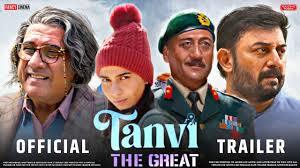
When Silence Speaks Louder: A Different Kind of Review for a Different Kind of Film

This isn’t your typical film review. Like ‘Tanvi the Great’ itself, it’s different – but not less.
There’s a moment in ‘Tanvi The Great’ when Colonel Raina watches his granddaughter arrange her books in perfect symmetry, each spine aligned with mathematical precision. The camera lingers not on his confusion, but on the quiet poetry of her ritual. In that stillness, I saw Meera’s mother, my friend, who once told me through tears how her daughter could recite the entire Mumbai local train schedule but couldn’t say “I love you” the way the world expected her to.
I know four such warriors. Four parents who’ve become human shields against a world that mistakes difference for deficiency. They are Priya, whose son sees patterns in raindrops that would make meteorologists weep; Rajesh, whose daughter speaks in colors when words fail her; Ananya, whose child finds music in the hum of ceiling fans; and Amit, whose son builds castles from bottle caps while others build walls around him.
Watching Anupam Kher’s directorial return, I didn’t just see a film – I witnessed a conversation that’s been whispered in therapy rooms and shouted in IEP meetings across India. A conversation about dreams that refuse to fit into neurotypical boxes.
The Poetry of Imperfection
Anupam Kher’s latest directorial effort, “Tanvi the Great,” offers a groundbreaking portrayal of autism as a superpower rather than a disability. But here’s what the press notes won’t tell you: it’s also a
love letter to every parent who’s ever wondered what happens when they’re no longer there to translate their child’s brilliance to an impatient world.
The Director’s Touch: Simplicity as Sophistication
What sets Kher’s direction apart is his understanding that profound stories need not be told with complex techniques. His approach is refreshingly simple — he lets the story breathe, lets the characters exist without theatrical manipulation. The film’s simplicity isn’t a limitation; it’s a choice. Kher knows that when you’re dealing with a subject as nuanced as autism, the director’s job isn’t to dazzle but to illuminate. His selection of this story, inspired by his own autistic niece Tanvi, demonstrates a filmmaker who has chosen authenticity over awards, connection over convention.
The film serves as a love letter of appreciation to parents of such different—but no less—children, who are trying to discover their children’s likes and dislikes while supporting them to keep their confidence up. It’s a live questionnaire for every audience member who finds themselves smiling at the beautiful moments created by the director and script writer, compelling them to answer for their own responses and roles toward such parents and children.
Shubhangi Dutt’s Tanvi doesn’t perform autism—she inhabits it. In her debut performance, Dutt captures the small nuances of her character with such honesty that the performance never feels like acting. There’s no Hollywood-style savant manipulation here, no Rain Man counting cards or Temple Grandin designing cattle chutes. Instead, we get something rarer: a young woman whose autism is neither her defining limitation nor her magical superpower, but simply the lens through which she sees a world that needs better focus.
When Tanvi decides to join the Indian Army to honor her father’s memory, the film doesn’t treat it as an impossible dream requiring miraculous intervention. It treats it as what it is: a daughter’s love manifesting in the language she knows best—dedication, structure, and unwavering purpose.
The Music of Understanding
MM Keeravani’s score deserves a separate verse in this symphony of understanding. The music is a perfect companion to the narrative, never overpowering but always present when needed. Like autism itself, it exists in the spaces between the obvious, in the frequencies others might miss.
I think of Priya’s son, who can hear the anxiety in his mother’s voice two octaves before she realizes she’s stressed. Keeravani’s compositions seem to understand this hyperacuity, weaving melodies that don’t assault the senses but embrace them. In a cinematic landscape where background scores often bludgeon audiences into feeling, this restraint feels revolutionary.
The Weight of Tomorrow
But here’s where the film’s true courage lies, and where my friends’ midnight fears find their echo: the unspoken question that haunts every autism parent—what happens when we’re gone?
Priya often says, her voice carrying the weight of sleepless nights, “My husband is working day and night, trying to establish a good business along with his job, because he knows after us, it would be difficult for our son to face the challenges. At least he should not face monetary crunches. His sister is there, of course, but money will ensure future resources.” I could hear her worries very loudly in those words—the same worries that echo in different octaves across the homes of Rajesh, Ananya, and Amit, whose children belong to different age groups but share the same uncertain tomorrow.
In India, autism is still a misunderstood condition in many parts of India, particularly in rural areas. Due to cultural beliefs and misinformation, some families see autism because of supernatural forces, karma, or bad parenting. This isn’t just a statistic for my friends; it’s the hostile territory they navigate daily while building financial fortresses for futures they won’t always be there to protect.
When Ananya’s daughter scripted her first independent grocery store visit, it wasn’t just about buying milk—it was about proving she could exist in a world that might not have advocates forever.
When Rajesh’s daughter learned to travel alone on the metro, her triumph was shadowed by his terror of a society that might not understand her stimming as self-regulation rather than disturbance.
And always, always, the question of resources—will there be enough to cushion the inevitable bumps when parental shields are no longer there?
The Grandfather’s Journey
Anupam Kher’s Colonel Raina becomes the audience’s surrogate in this journey of understanding. His journey from resistance to recognition is portrayed with emotional precision. But more than that, he represents every grandparent, every extended family member, every stranger who must learn that love isn’t always loud, that intelligence doesn’t always speak in expected tongues.
In one particularly moving scene, Kher’s character watches Tanvi solve a complex logistics problem with the systematic precision that only an autistic mind can bring. The camera captures not just his surprise, but his grief—grief for the years he spent trying to fix what was never broken.
The Characters’ Authentic Voices
The supporting characters in ‘Tanvi The Great’ aren’t mere plot devices but real people with real responses to difference. Each character represents a different stage of understanding—from the initial confusion of well-meaning relatives to the gradual recognition of Tanvi’s unique capabilities. Kher’s direction ensures that no character becomes a caricature; instead, they reflect the genuine spectrum of reactions that families encounter when autism enters their lives.
The Cannes Whisper
South African director Oliver Schmitz stated, “It’s a perspective, it’s new, and it’s fresh. It says so much about human nature and exclusion. I am deeply moved by the movie that I’ve seen tonight”. When international filmmakers at Cannes 2025 found themselves emotionally moved by this story, it wasn’t just because of technical excellence—it was because truth translates across languages, cultures, and neurotypes.
The Numbers Game
The statistics are staggering and cold: According to the latest estimates from the Centres for Disease Control and Prevention in the USA, nearly one in 36 children meet criteria for an Autism spectrum disorder (ASD) diagnosis. In India, where diagnostic services remain scattered and stigma runs deep, these numbers represent not just data points but entire families navigating uncharted waters.
Amit once told me that his son’s autism diagnosis came with a peculiar grief—not for the child he’d lost, but for the world that seemed determined to remain lost to his child’s unique gifts.
The Different Review for a Different Film
This film educates without lecturing and moves without manipulating. Like my friends who’ve
learned to advocate without alienating, to fight without becoming fighters, ‘Tanvi The Great’ achieves something rare: it changes minds by changing hearts.
The film’s Hindi review notes, यह फिल्म बताती है फि िै से प्यार और समझ फिसी भी चनौतीु िो आसान बना सिती है (This film shows how love and understanding can make any challenge easier). But easier doesn’t mean easy. Every parent I know would testify to that.
The Inspiration Behind the Camera
What gives this film its authenticity is its origin story. Drawing inspiration from his own autistic niece, Anupam Kher crafts a narrative that breathes with lived experience rather than clinical observation. The film script, inspired by Anupam Kher’s autistic niece Tanvi, transforms what could have been another inspirational disability narrative into something more honest: a story about seeing potential where others see problems, about finding strength in difference, about love that doesn’t try to cure but simply understands.
This personal connection is what elevates the film from mere storytelling to heartfelt testimony. Kher has tried to make it from the heart, and his efforts reach our hearts because they come from a place of genuine understanding rather than external observation.
The Cinematic Language of Acceptance
The film doesn’t rely on loud drama or larger-than-life characters. Instead, it wins you over with its sincerity, warmth, and ability to touch on an important subject without turning didactic. In a film industry often addicted to hyperbole, this restraint feels radical.
The cinematography deserves mention for its treatment of Lansdowne’s landscapes—they become more than backdrops; they become sanctuaries. The cinematography captures the serenity of Lansdowne beautifully, creating a calm backdrop for the emotional storm brewing within the characters.
The Tomorrow That Terrifies
But beyond the beauty, beyond the performances, beyond the critical acclaim, lies the question that keeps my friends awake: what kind of world are we preparing for our children, and what kind of children are we preparing for the world?
When Meera’s mother watches her daughter navigate social situations with the intensity of a chess grandmaster calculating seventeen moves ahead, she sees not disability but differently-abled intelligence. Yet she also sees a world that might not pause long enough to appreciate such complexity.
The Revolution in Reels
‘Tanvi The Great’ doesn’t just represent a return to direction for Anupam Kher—it represents a maturation in Indian cinema’s approach to neurodiversity. It’s a film that may not leave you overwhelmed, but it will leave you moved. And sometimes, that’s enough.
Sometimes, enough is everything.
The Final Frame
Like autism itself, this film exists in the spaces between conventional understanding. It doesn’t scream for attention but demands it through quiet dignity. It doesn’t promise miraculous transformations but offers something rarer: recognition that transformation might not be necessary.
For my four friends – Priya, Rajesh, Ananya, and Amit—and for millions of parents across India who daily translate their children’s extraordinary minds to an ordinary world, ‘Tanvi The Great’ isn’t just a film. It’s validation that their love, their advocacy, their shield-and-sword protection isn’t just necessary—it’s heroic.
In the end, this isn’t a review of a film about autism. It’s a recognition of a film that understands autism. And in understanding, it achieves something that no amount of awareness campaigns can: it makes us feel less alone in our different ways of being human. The opposite of normal, as the film suggests, isn’t abnormal. It’s extraordinary. And sometimes, extraordinary is exactly what this world needs.
Some stories can only be told by those who’ve lived them. Some reviews can only be written by those who’ve felt them. This is both.
Author


Advertisement




注册以获取100 USDT
Your point of view caught my eye and was very interesting. Thanks. I have a question for you. https://accounts.binance.com/es-MX/register?ref=GJY4VW8W