
Now Reading: THE 7 SINS OF PAKISTAN: INDIA’S NON-NEGOTIABLE DEMANDS
-
01
THE 7 SINS OF PAKISTAN: INDIA’S NON-NEGOTIABLE DEMANDS
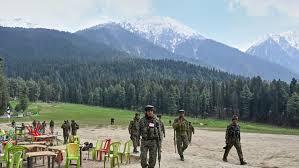

The soil of Pahalgam still bears the dark stains of innocent blood. As families mourn and a nation seethes with righteous anger, Pakistan’s decades-long dance with terrorism has crossed the final threshold of India’s forbearance. The Baisaran valley massacre represents not merely another attack, but the culmination of seven unforgivable transgressions that can no longer be answered with diplomatic platitudes or strategic restraint.
India stands at the precipice of transformation—not as a victim seeking vengeance, but as an emerging superpower demanding justice. The time for half-measures has passed. The following seven sins constitute Pakistan’s debt to India and humanity—a debt that must now be paid in full.
1. HARBORING ARCHITECTS OF TERROR
Like a nation housing arsonist while claiming to fight fires, Pakistan continues to shelter India’s most wanted terrorists. Dawood Ibrahim, mastermind of the 1993 Mumbai bombings, lives in palatial comfort in Karachi’s defense housing area. Maulana Masood Azhar, architect of Parliament and Pulwama attacks, operates with impunity from Pakistani soil.
These men are not mere criminals; they are architects of mass murder. Their extradition is not negotiable—it is the first test of Pakistan’s commitment to civilization itself. Every day they remain free is another day Pakistan stands condemned as a state sponsor of terrorism.
2. MILITARY-TERROR NEXUS
Pakistan’s army and intelligence services represent a malignancy in uniform—an institution that has weaponized terrorism as state policy. The Chief of Army Staff and Director-General of ISI operate not as defenders of a nation but as puppet masters of terror organizations.
This military high command must face prosecution—either in Indian courts or before international tribunals—for orchestrating cross-border terrorism. No peace is possible while these generals play wargames with civilian lives as pawns.
3. WATER THEFT
Like a thief in the night, Pakistan has exploited India’s generosity under the Indus Waters Treaty, claiming water resources while denying India its fair share. This hydrological imbalance has persisted for too long—a silent environmental aggression against Indian agriculture and energy security.
India now rightfully demands access to 50% of Indus River waters. This is not merely about cubic meters of flow; it represents the lifeblood for millions of Indian farmers and the power that could illuminate thousands of villages.
4. BALOCHISTAN’S SUBJUGATION
The province of Balochistan writhes under Pakistan’s boot—its resources plundered, its people oppressed, its autonomy crushed. Pakistan’s crimes here mirror the very colonial subjugation it claims to have escaped. Rich in natural resources yet impoverished by design, Balochistan’s struggle for self-determination deserves India’s vocal support.
This is not interference but moral imperative. A nation born of freedom must stand with those who seek it. By supporting Balochistan’s right to determine its own future, India upholds the very principles upon which its own independence was won.
5. TERROR FACTORIES IN OCCUPIED KASHMIR
Pakistan-occupied Kashmir has been transformed into a vast training ground for terrorism—a blood- soaked academy where young men are radicalized, armed, and aimed at India. These camps are not hidden; they operate in plain sight, with the full knowledge and support of Pakistani authorities.
Their complete dismantlement—verified by international observers—must be a precondition for any dialogue. Every camp left standing is a loaded weapon pointed at India’s heart.
6. CULTURAL GENOCIDE
Like vandals defacing humanity’s shared heritage, Pakistan has presided over the systematic destruction of Hindu and Sikh religious sites. Ancient temples lie in ruins, historic gurdwaras crumble from neglect, and minorities face persecution for practicing their faith.
India demands the restoration and protection of these sacred spaces—not merely as buildings of stone, but as monuments to a shared civilizational legacy that transcends borders. This is not about religion but about respecting the foundations of cultural identity.
7. DENIAL OF CLOSURE
In a final act of cruelty, Pakistan routinely denies India even the bodies of terrorists killed during attacks. This calculated callousness deprives victims’ families of closure and prevents forensic examination that would reveal the attackers’ origins and support networks.
The return of terrorists’ remains is both symbolically and practically essential—allowing India to establish evidence chains and giving victims’ families the cold comfort of knowing justice has begun.
THE PATH FORWARD: STRENGTH THROUGH STRATEGY
India’s response must transcend emotional reaction. What is required is not blind vengeance but calculated pressure—applied through diplomatic, economic, military, and intelligence channels:
- Targeted strikes on terror infrastructure can be executed with surgical precision, dismantling Pakistan’s terror apparatus without triggering wider conflict.
- International isolation must be intensified, with Pakistan’s terror complicity documented before every global forum from the UN Security Council to financial watchdogs.
- Intelligence operations must be expanded to neutralize threats before they materialize and expose Pakistan’s terror network to global scrutiny.
- Water diplomacy must be leveraged to secure India’s rightful share of river resources, transforming hydrological justice into agricultural prosperity.
FROM REGIONAL POWER TO GLOBAL PILLAR
This moment of crisis holds within it the seeds of transformation. By responding with strategic wisdom rather than unbridled fury, India can ascend from regional power to global pillar—a nation whose moral authority matches its military and economic might.
The Pahalgam tragedy can become the catalyst for India’s final emergence as the third pole in global power dynamics, alongside the United States and China. But this ascension depends on disciplined statecraft—justice without vengeance, strength without excess, determination without recklessness.
Pakistan’s seven sins have accumulated over decades, each transgression emboldening the next. The time has come for India to present the bill. Not through chaotic conflict but through calculated consequence. Not through hatred but through the cold clarity of justice.
The world is watching. History is waiting. And India must not falter in its resolve to ensure that the bloodshed in Pahalgam becomes the foundation not of war, but of lasting transformation.
Author


Advertisement




безплатен профил в binance
Thanks for sharing. I read many of your blog posts, cool, your blog is very good. https://accounts.binance.com/fr-AF/register?ref=JHQQKNKN
binance account creation
Your article helped me a lot, is there any more related content? Thanks!